Service Areas
Roofers in Media, PA
Finding roofers in Media, PA means considering more than the roof visible from State Street.
- No-cost request
- Matched by ZIP code
- Delaware County, PA
01
Borough character and the wider Media mailing area
Finding roofers in Media, PA means considering more than the roof visible from State Street. A borough twin, an older stone house, and a newer home with a Media mailing address can require very different work. Delco Roofers is a free homeowner referral service from SoleSource Pros, not a roofing contractor. Your request goes to one independent licensed and insured roofer, never multiple companies. That roofer evaluates the property, prepares the quote, and handles any construction agreement directly with you. Begin with the building's history and the symptoms you have noticed, rather than assuming every leak calls for replacement.
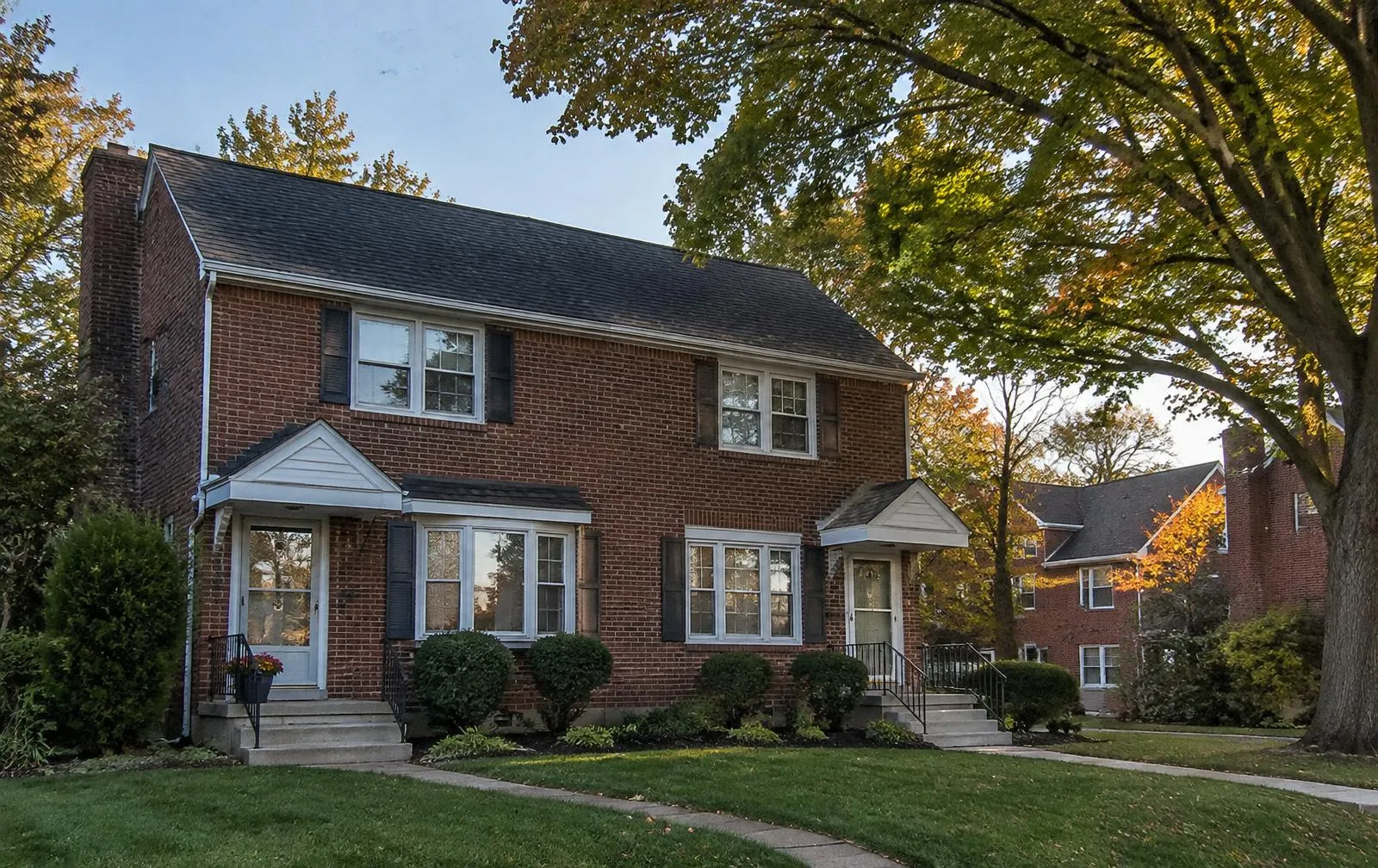
Near the courthouse and residential streets off State Street, houses can combine nineteenth-century masonry, early twentieth-century additions, and roofing replaced much more recently. Older stone homes may retain slate on a steep main roof while a porch or kitchen addition uses another material. Have the roofer distinguish these areas during the inspection. A failing metal connection beside a chimney is not evidence that every slate has reached the end of its useful life, and a new shingle section does not establish the age of adjoining work.
Rose Tree and homes toward Upper Providence or Middletown illustrate why a Media address needs a municipal check. Those surrounding communities are not automatically part of Media Borough. Identify the municipality for your parcel, then ask its office about permits and any review relevant to the actual scope. If an older property's appearance will change, ask specifically about applicable exterior review before ordering materials. Neither architectural age nor a neighbor's completed roof establishes the approvals for your own house.
02
Read the leak before choosing the project
Tell the roofer whether water appears after a short downpour, prolonged rain, or thawing snow. A dated photograph of a ceiling mark and a description of the room above it can be more useful than guessing where to spread sealant. On closely spaced houses, the route may involve a shared wall junction, a chimney, or an upper slope draining toward a lower roof. Ask which observations support the diagnosis and which concealed areas remain uncertain until materials are opened.
A targeted repair deserves consideration when the surrounding covering is sound and the defect can be tied into it properly. Widespread brittle shingles, repeated failures in different locations, or extensive deterioration may justify a broader replacement discussion. For slate, request an assessment of individual units, fasteners, and flashing rather than an automatic conversion to asphalt. Ask how any proposed change affects weight and detailing. The written recommendation should distinguish necessary work from optional improvements and explain the limitations of retaining older components.
03
Trees, nor'easters, and winter roof edges
Mature trees bring shade to Media's established residential blocks, but leaves can collect behind chimneys and in roof valleys. Branch contact may abrade a covering even without a dramatic impact. After thunderstorms, look from a safe ground position for broken limbs, displaced roofing, or newly overflowing gutters. Do not step onto slate or climb a wet ladder to collect evidence. Report the storm date and visible changes to the roofer, who can discuss whether temporary protection is appropriate before a permanent repair.
Nor'easters can hold wind-driven moisture against a wall or dormer for hours, exposing weak details that stay dry during ordinary showers. Ice dams call for a different investigation: warm air reaching the attic can melt snow that refreezes at colder eaves. Ask about air sealing, insulation, ventilation, and roof-edge protection together. A roofing project alone may not address the source of winter heat loss. Damp attic surfaces also deserve attention because condensation and outside water can produce similar indoor evidence.
Ready for a roofing estimate?
Tell us about your Delco property to begin a focused conversation with one independent roofing contractor.
04
Drainage and access on compact lots
When a gutter repeatedly spills near a front step, have the roofer trace the water back to the supplying slopes. An outlet packed with leaves, a poorly pitched run, and concentrated valley discharge are different conditions. Request a description of the proposed correction, including fascia repairs if needed. On older masonry homes, avoid treating chronic splashback as merely a cosmetic annoyance. Ask where downspouts release water and whether a change would send runoff toward an entrance, neighboring property, or foundation area.
Borough staging may involve limited driveway space, nearby sidewalks, and landscaping close to the eaves. Before delivery, agree on material placement, debris removal routes, and how workers will protect adjoining surfaces. Ask the municipality about any permission needed if a public area may be affected; do not assume that a roofing contract includes that permission. Indoors, discuss attic storage and vibration around fragile objects. Define cleanup around porches and narrow side passages where small pieces of debris can be difficult to spot.
05
Keep the referral and construction agreement separate
Delco Roofers helps arrange an introduction through SoleSource Pros; it does not install roofing, supervise a crew, or provide the independent contractor's workmanship warranty. During the appointment, ask for current insurance information and applicable licensing or registration documentation. Review who will communicate findings and how you can authorize changes. The free referral sends your request to one roofer rather than distributing it to competing businesses, but you still decide whether the roofer's proposed scope and contract suit your needs.
A useful Media quote identifies each roof area, removal assumptions, proposed materials, flashing work, and any ventilation changes. It should explain how concealed decking damage will be documented and priced before additional work proceeds. Request payment milestones, scheduling assumptions, disposal responsibilities, and written warranty terms. If preserving an older roof is your priority, make that clear before the proposal is drafted. A precise agreement gives both homeowner and contractor a better starting point than a total price with unexplained allowances.
Questions
Frequently asked questions
Go deeper
Services available in Media
Roof Replacement
Explore Delco roof replacement for twins, colonials and older slate homes. Understand tear-off, flashing and estimates before requesting a free referral.
Learn moreRoof Repair
Find guidance on Delco roof leaks, flashing and shingle repairs. Request a free referral to one independent contractor for an assessed repair scope.
Learn moreStorm Damage Roof Repair
After a Delco storm, prioritize safety, document roof damage and discuss temporary protection and permanent repairs through a free contractor referral.
Learn moreEmergency Roof Tarping
Request temporary roof protection in Delco. Learn safe steps after damage, what to ask about tarping and how to arrange permanent repairs.
Learn moreFlat Roofing
Compare EPDM, TPO, modified bitumen and coatings for Delco low-slope roofs. Discuss leaks, drainage and repair options through a free referral.
Learn moreGutters
Plan Delco gutter replacement with clear sizing, outlet and drainage details. Request a free referral for an assessment of gutters, fascia and runoff.
Learn more
Explore
More to explore
Get started
Ready to get your project started?
Get a single roofing introduction for your Delaware County home, without your inquiry being resold to several businesses.